.png)





Why fashion and beauty brands are betting on attraction again.
For a while, fashion advertising became strangely anonymous.
Polished campaign worlds, pristine product shots, models who looked expensive but not always memorable.
Somewhere in the shift toward social-first content, influencer marketing and aesthetic consistency,
the idea of the face became less important than the feed.
Now, that seems to be changing.
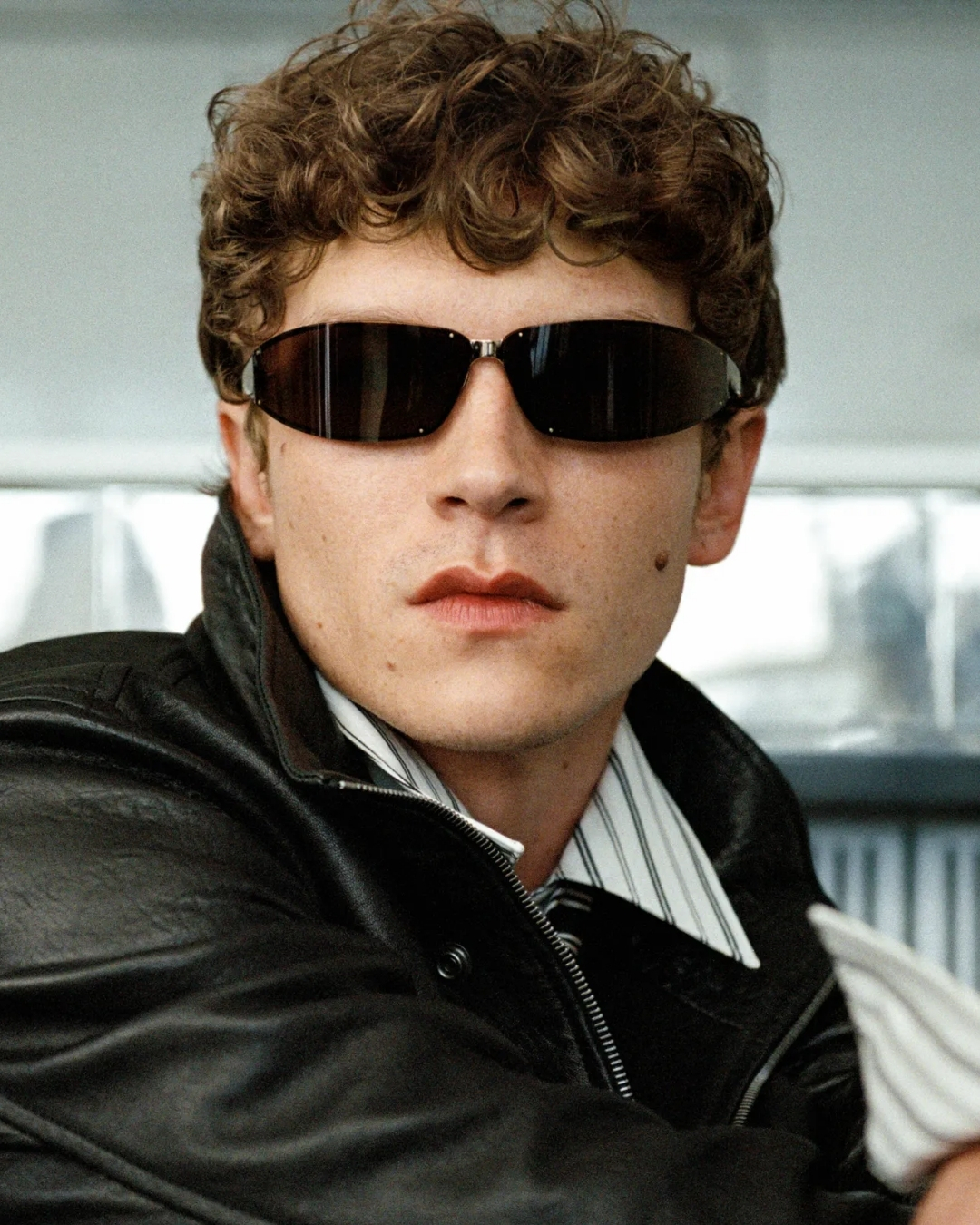
Across fashion and beauty, recognisable people are moving back to the centre of campaigns.
Actors, internet crushes, musicians, creators and familiar cultural figures are being cast not just because they are famous, but because they bring something a model alone cannot always provide: a story.
Saint Laurent has Connor Storrie.
Valentino has Dakota Johnson and Alexander Skarsgård.
Calvin Klein has Tate McRae.
Tommy Hilfiger has Romeo Beckham.
The casting is becoming part of the creative idea again.
And perhaps more importantly, brands seem to have remembered something advertising has always known:
people are interested in people.
Cast The Crush
Saint Laurent’s recent campaign featuring Connor Storrie is one of the clearest examples.

Storrie arrived with the one thing brands cannot manufacture overnight: momentum.
He had already become a breakout face, someone people were actively searching, sharing and talking about.
Saint Laurent did not need to create the fascination. It simply stepped into it.
That is what makes the modern heartthrob so valuable.
A recognisable face brings attention before the campaign even begins.
There is already curiosity around the person, already an audience waiting to see what they wear next.
The campaign does not create the crush. It casts it.
Fashion has always relied on muses and desirable faces, but what has changed is the speed.
A television role, viral interview, fan edit or red carpet appearance can turn someone into a cultural obsession almost overnight. The smartest brands are watching closely.
Sell The Chemistry
Valentino’s campaign with Dakota Johnson and Alexander Skarsgård takes the idea even further.

Here, the campaign is less about a single famous face and more about what happens when you put two together.
The chemistry becomes the creative direction.
There is tension, intimacy and a feeling that something is happening beyond the frame.
The perfume is the product. The attraction is the hook.
This is why the strongest celebrity campaigns work. They do not simply insert a famous person into an image.
They understand what that person brings, then build the creative around it.
In Valentino’s case, the audience is not just being asked to recognise Johnson and Skarsgård.
It is being asked to watch them.
That makes the campaign feel closer to entertainment than traditional advertising.
Fame Comes Pre-Loaded
Tommy Hilfiger’s use of Romeo Beckham works slightly differently.
The name already carries a story.

There is fashion lineage, football culture, celebrity history and public fascination
with the Beckham family packed into a single casting decision.
A new model may need to be introduced. Romeo Beckham does not.
That recognition reduces the amount of work the campaign has to do.
It also helps that the “Romeo” trope practically writes itself.
Heartthrob by name, heartthrob by design.
This is the power of recognisability. A face can act like shorthand, carrying cultural meaning into the campaign
before the clothes have even been considered.
Inherit The Audience
Then there is the creator.

Sophia Begg represents a more modern type of campaign face
because her relevance does not come from traditional celebrity.
It comes from the internet.
Creators bring something incredibly valuable: an existing relationship with an audience.
Followers already know how they dress, what they buy, how they speak and what they consider desirable.
So when a creator becomes the face of a campaign, the brand is not simply borrowing visibility.
It is borrowing familiarity.
That matters in fashion and beauty, where audiences are increasingly sceptical of obvious advertising.
A creator who already feels credible within the category can make the relationship between brand and audience feel more natural. The face becomes the bridge.
The Formula Still Works
Calvin Klein proves that none of this is particularly new.
Its advertising history is built around recognisable faces.

Brooke Shields. Mark Wahlberg. Kate Moss. Justin Bieber. Jeremy Allen White.
The names change. The formula does not.
Find the person everyone is watching. Put them in Calvin Klein. Repeat.
Tate McRae fits neatly into that lineage.
She brings pop-star visibility, movement and a strong visual identity
that already makes sense within Calvin Klein’s stripped-back campaign world.
The genius is not constant reinvention.
It is knowing which part of the formula should stay the same.
Why The Face Matters Again
The face feels particularly valuable right now for a few reasons.
Social media is crowded. Brands produce more imagery than ever,
which means beautiful art direction alone does not always stop the scroll.
A recognisable person creates an immediate point of interest.
Audiences also follow individuals across platforms now. They do not simply see an actor in a film or musician onstage. They see interviews, memes, TikTok edits, red carpets, fan accounts and candid moments.
The person becomes an ongoing media channel.
And perhaps most importantly, consumers seem to be craving personality again.
After years of hyper-curated branding, a human face can feel surprisingly distinctive.
It can communicate glamour, humour, desire, awkwardness, fantasy or familiarity in a single frame.
That is difficult to reproduce with product alone.
The Casting Is The Campaign
The lesson is not that every brand needs a celebrity.
It is that brands need to understand what the face contributes.
The crush brings attention.
The actor brings story.
The creator brings trust.
The icon brings history.
The fandom brings reach.
The right person can make a campaign feel culturally alive before the tagline has even been written.
Fashion and beauty have not simply rediscovered celebrity.
They have rediscovered character.
After years of selling immaculate worlds, brands are remembering that sometimes
the most compelling thing in the image is the person looking back at us.
The face is back. And apparently, we still have a crush.
.svg)