





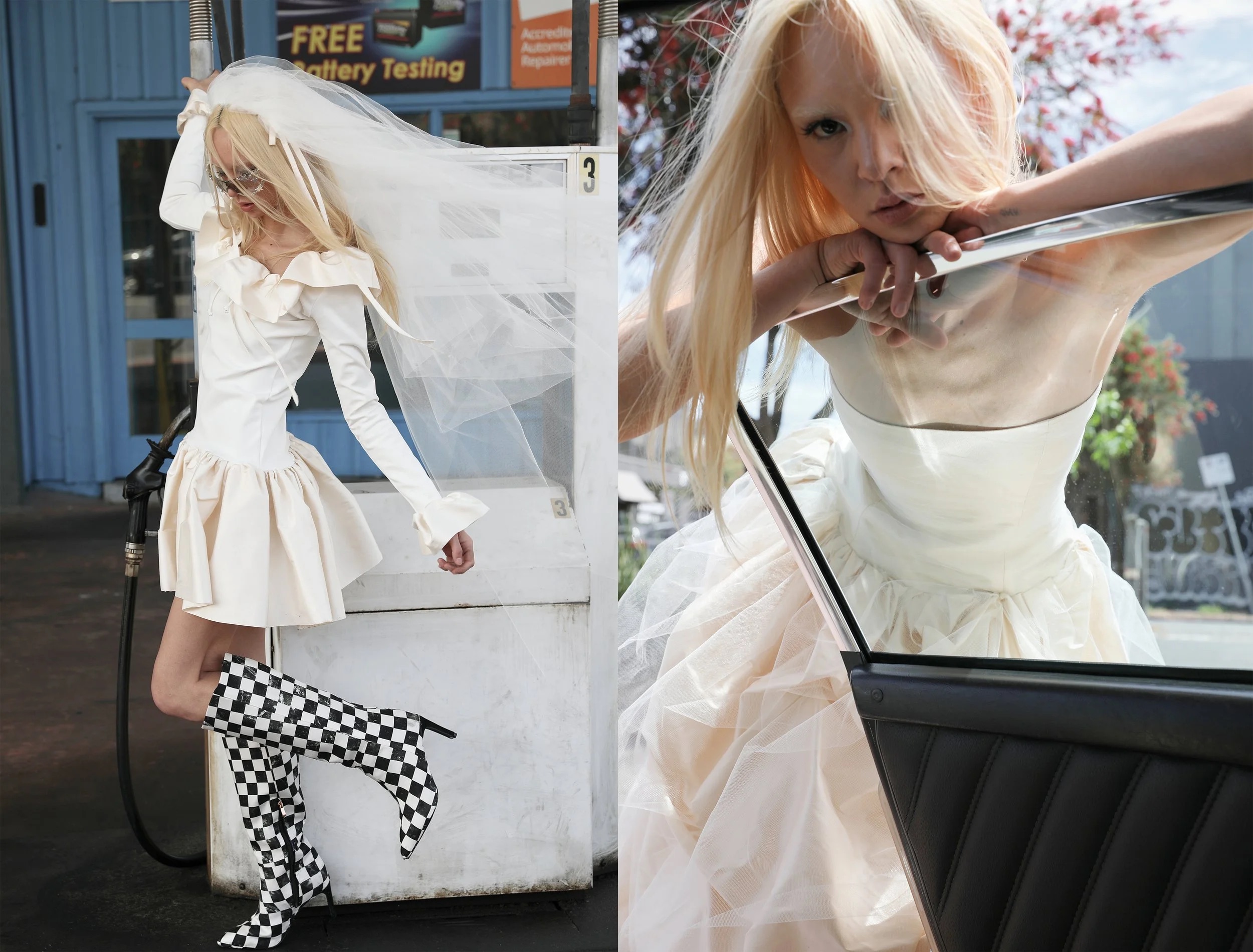
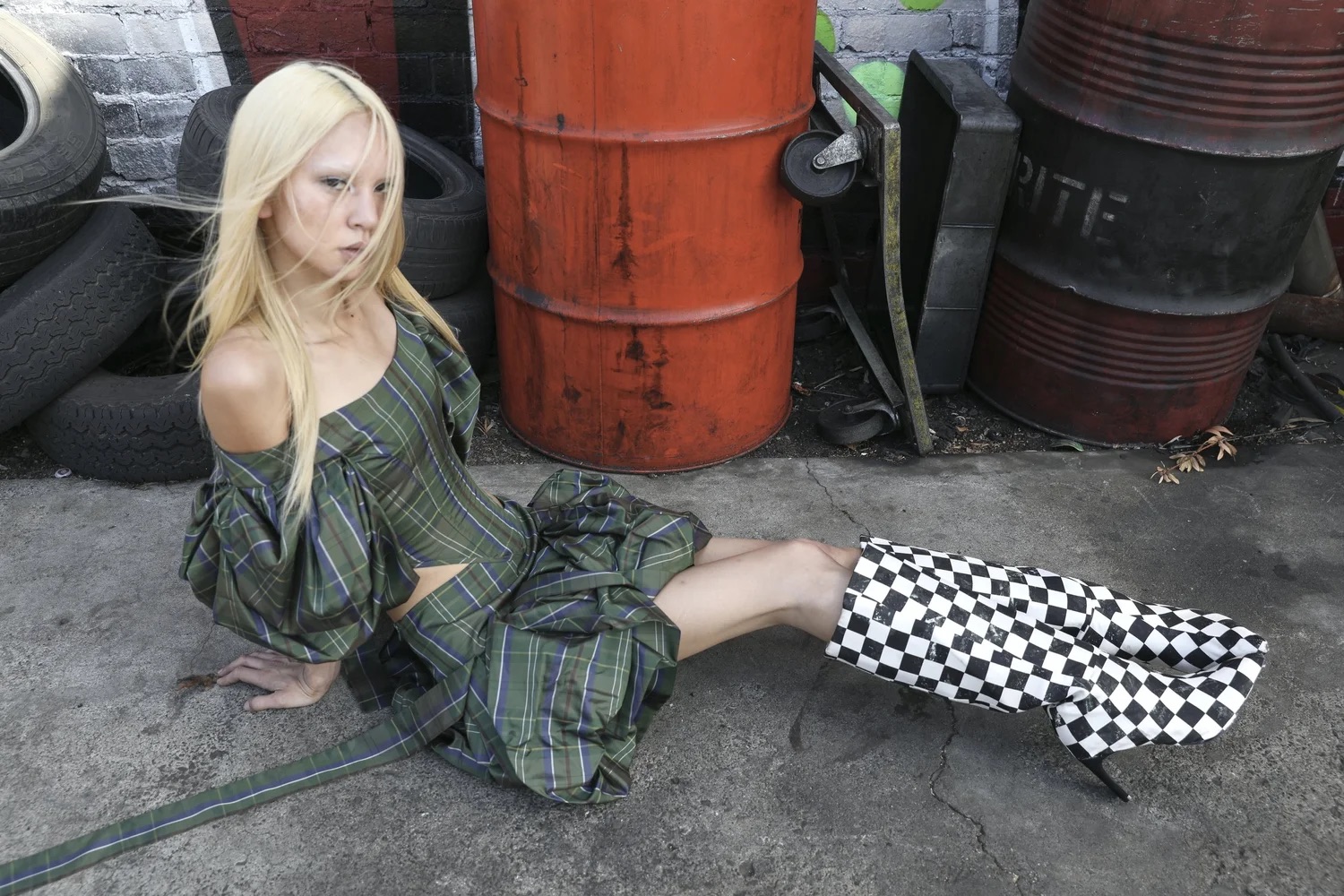
There's a bride at the petrol station, dressed in ivory with a veil trailing behind her, checkerboard boots on her feet and absolutely no intention of behaving like one.
A little romance, a little rebellion and perhaps a questionable getaway plan. Welcome to the world of Lucinda Babi, where the clothes are pretty, the proportions are dramatic and the story is rarely as innocent as it first appears.
Founded in 2018 by British-born, Melbourne-based designer Lucinda Houghton, the independent label has carved out a distinctive identity somewhere between childhood nostalgia, theatrical femininity and fashion fantasy.
But beneath the bows, ruffles and beautiful excess is something rather clever: a designer who understands that recognisable style isn't necessarily about repeating the same look. It's about creating a world that feels unmistakably yours.
For Lucinda, nostalgia isn't simply a passing aesthetic. It's personal.
Raised in Northern England before making Melbourne home, the designer has long drawn inspiration from British working-class culture, historical dress and the familiar details of her childhood. Think tartan, traditional tailoring, youth culture, and the peculiar romance of everyday memories.
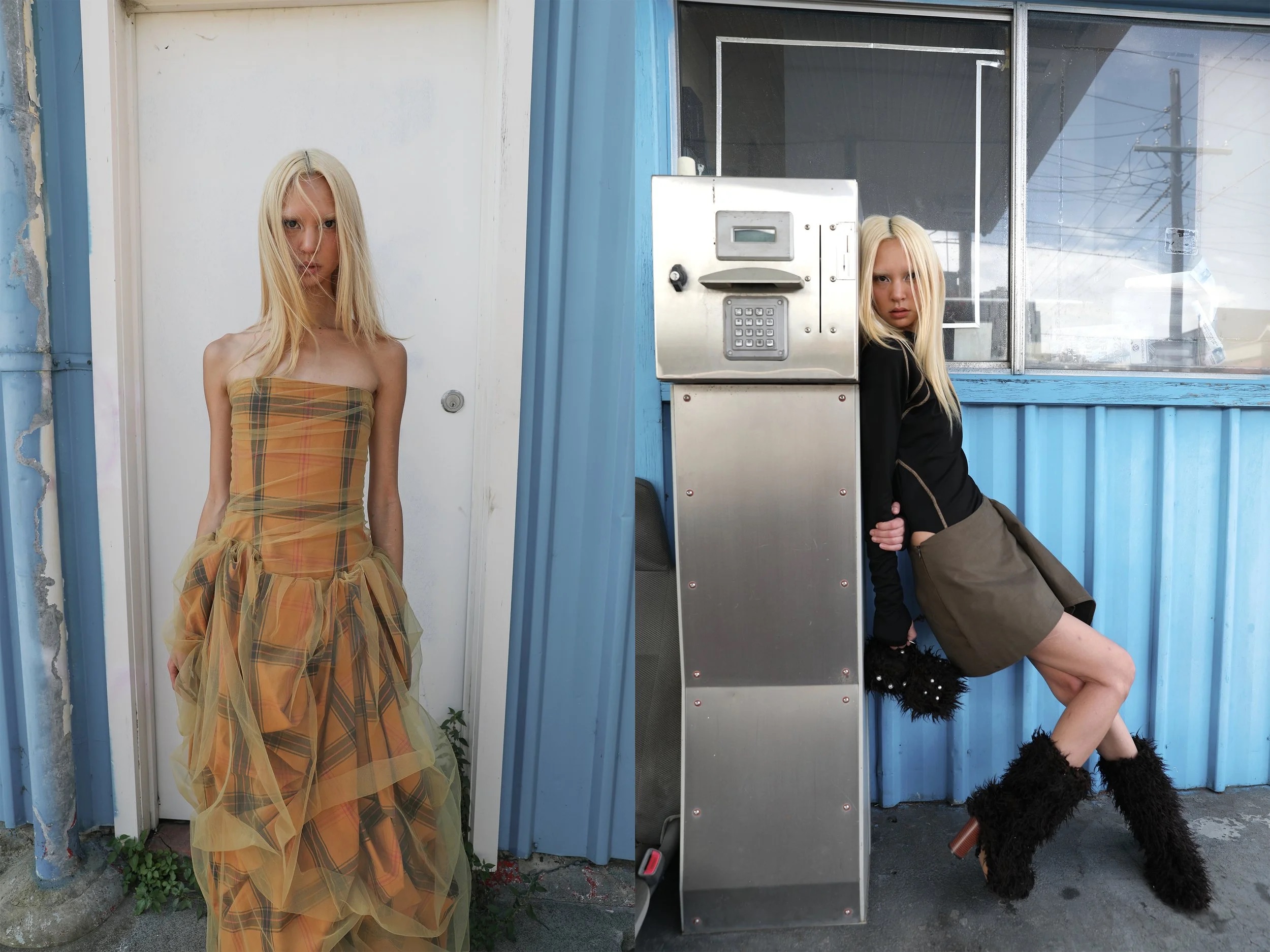
If there's one thing Lucinda Babi understands, it's the power of a silhouette that makes an entrance.
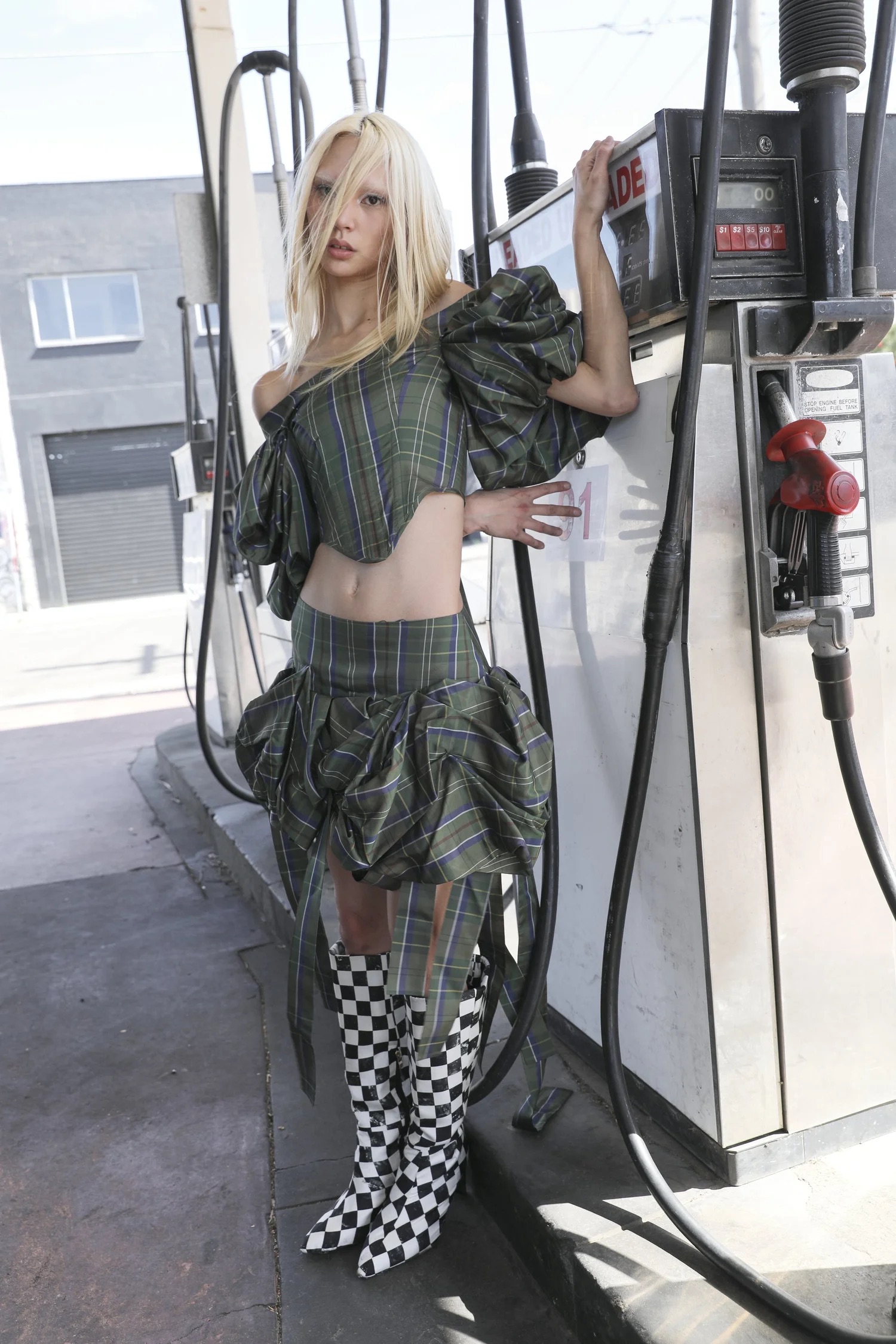
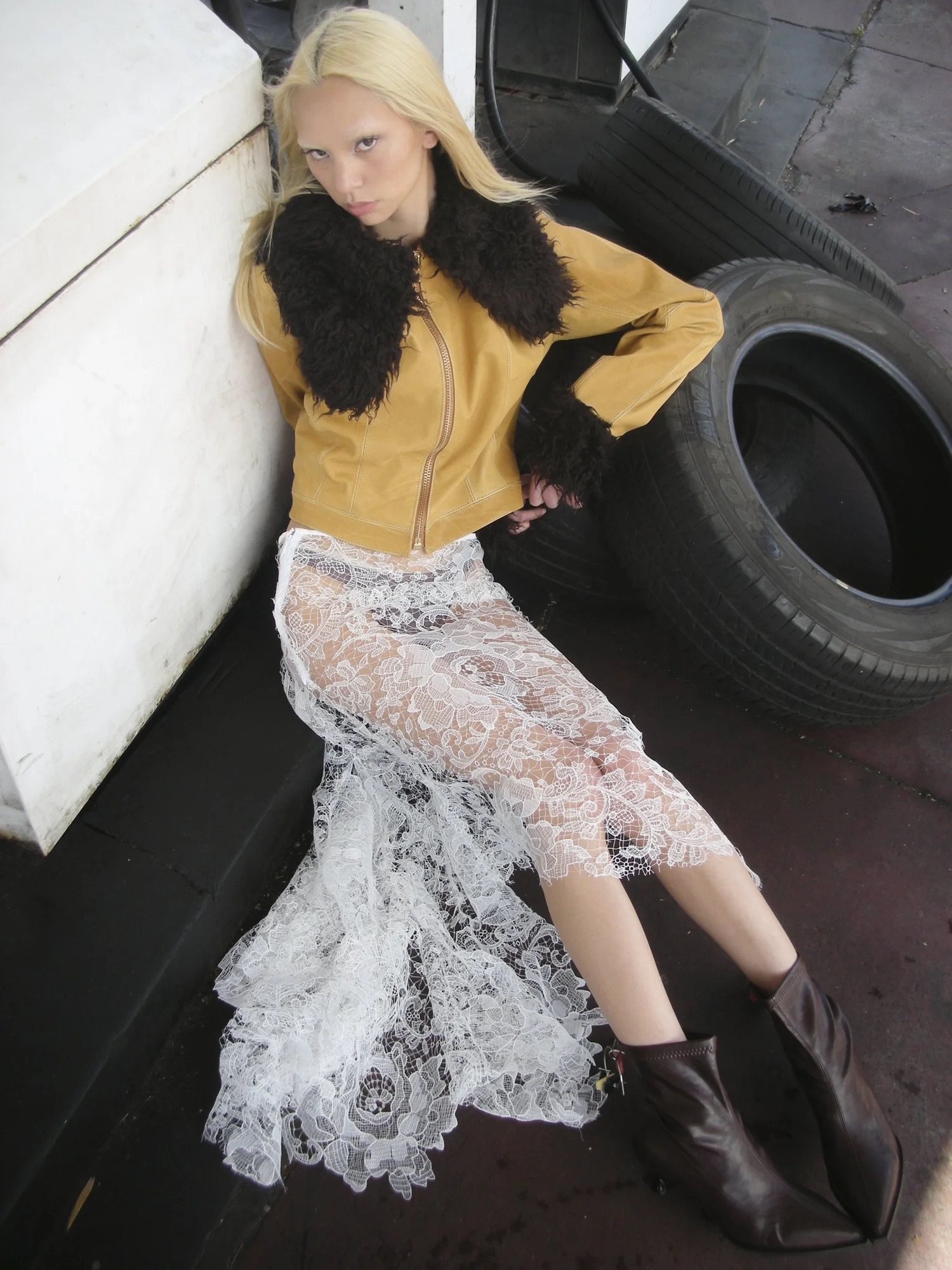
A sculptural checked ensemble might be paired with knee-high checkerboard boots. Delicate lace meets a rugged jacket. A bridal silhouette finds itself somewhere decidedly unbridal.
These contrasts are essential to the brand's appeal. Romantic details are interrupted by sportswear references, practical fabrics or deliberately unconventional styling, preventing the clothing from becoming overly precious.
Rather than committing to one neatly packaged aesthetic, Lucinda allows seemingly opposing influences to coexist.
And in a fashion landscape increasingly organised into micro-trends and aesthetics, there's something refreshing about a designer whose signature isn't easily reduced to a single internet-approved label.
The recognisable element isn't one particular bow, fabric or dress. It's the attitude behind them.
Enter I Still Can't Drive, Lucinda Babi's most recent collection, and arguably one of the clearest expressions of the label's playful approach to storytelling.
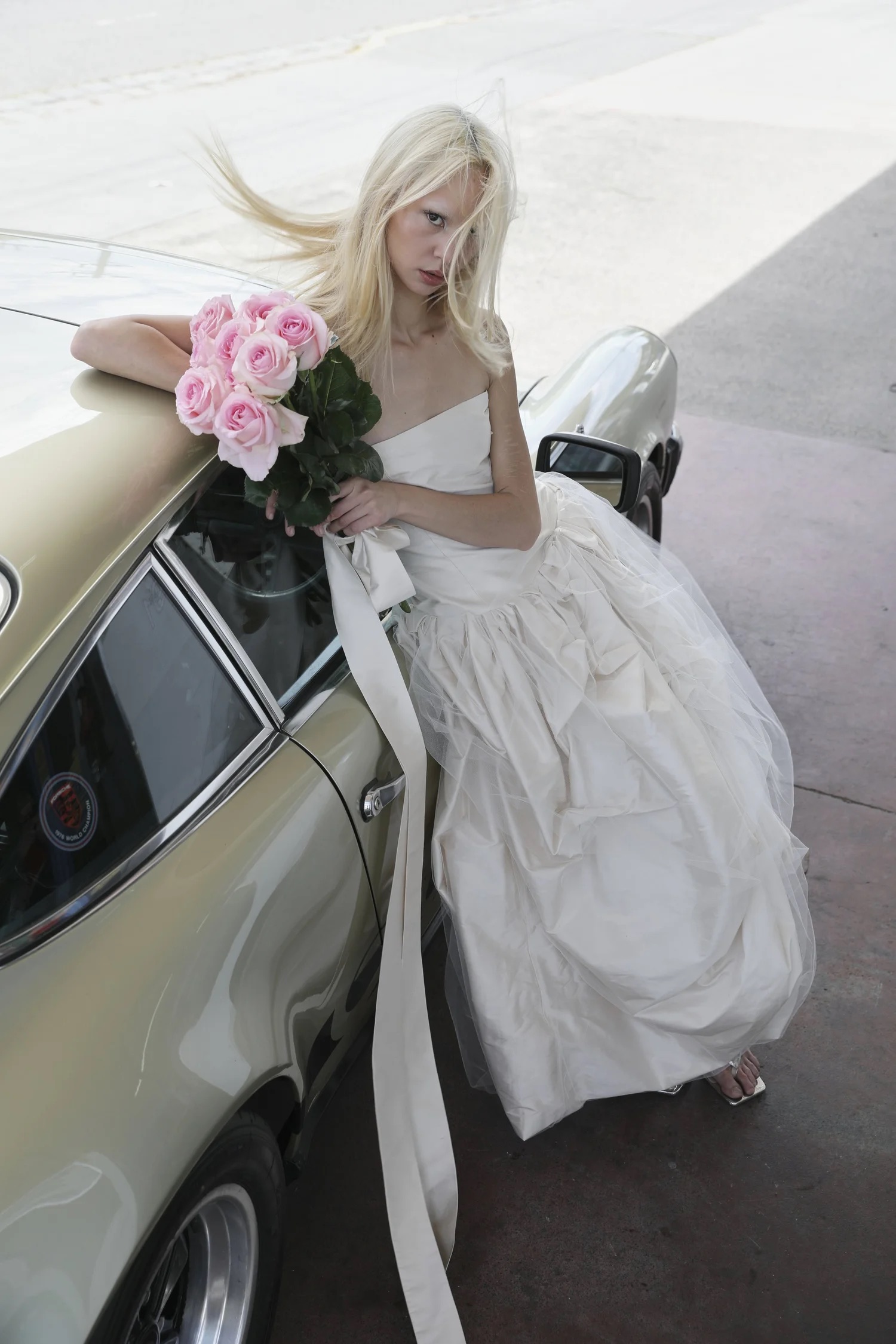
Inspired by the open road, vintage car interiors, escapism and the cinematic fantasy of the runaway bride, the collection trades the familiarity of home for the possibility of leaving it all behind.
There's something wonderfully contradictory about the premise. The road promises freedom, yet the collection's title suggests its protagonist might not be entirely prepared to take the wheel.
The clothes follow a similar logic.
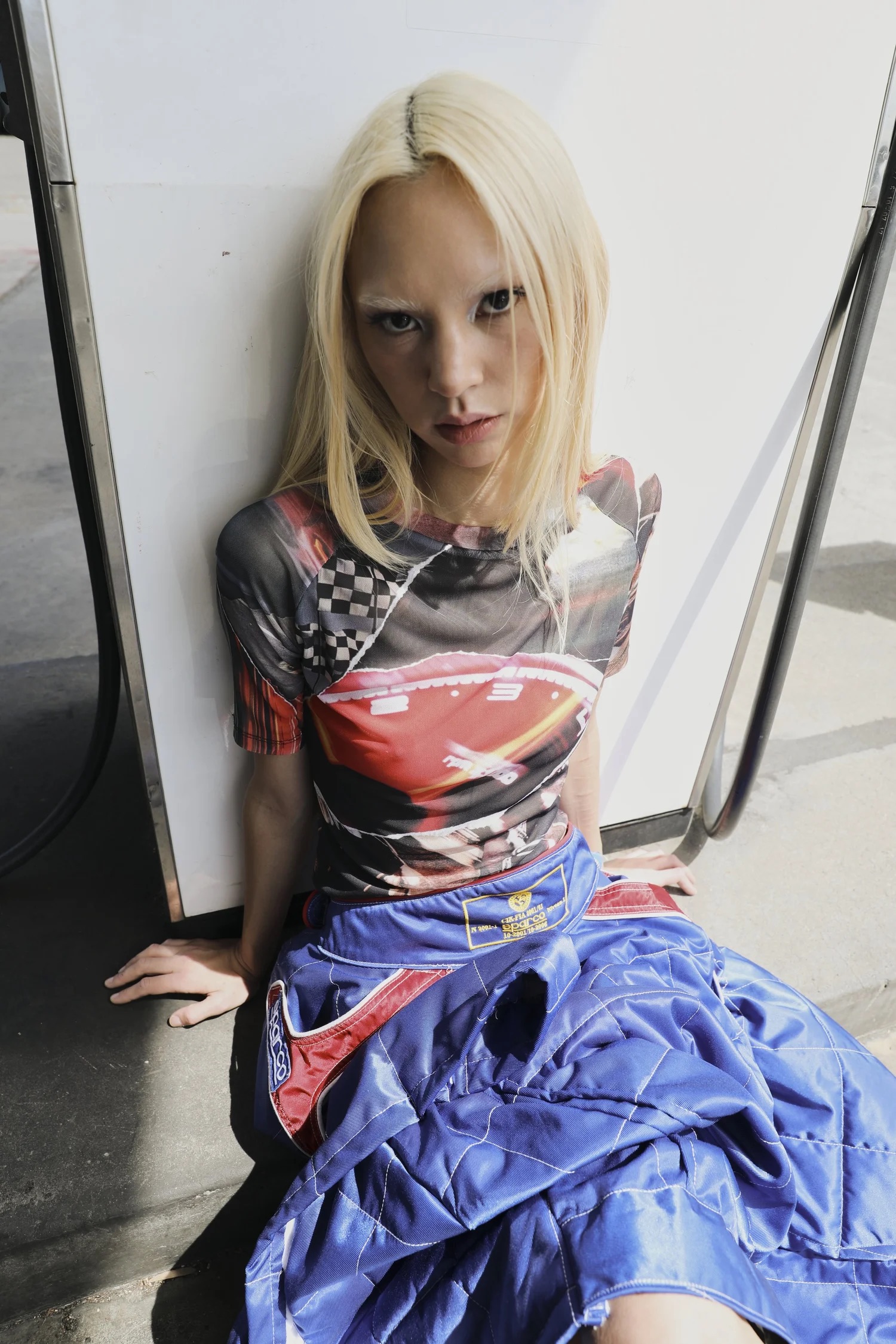
Romantic silhouettes sit alongside sporty details, structured tartan, delicate lace and exaggerated volume. Bridal references are removed from their traditional setting and placed against the decidedly unglamorous backdrop of a petrol station. And somehow, it works.
The campaign, photographed by Shakirra Rees and starring Jess Tangri, finds its character among fuel pumps, tyres and roadside architecture. The styling gives the clothing an attitude that feels both nostalgic and contemporary.
It's not simply a pretty collection photographed in an unusual location. The visual contrasts reinforce the story itself: softness against machinery, romance against reality, and the fantasy of independence against the awkwardness of finding your feet.
More importantly, the collection demonstrates how Lucinda's recognisable design language can survive an entirely different narrative setting. The girl who once belonged in a nostalgic sitting room has traded her surroundings for the open road. She's still unmistakably dressed by Lucinda Babi.
Fashion has always been capable of telling stories, but Lucinda Babi makes that storytelling central to the identity of the label. Each collection introduces its own references and imagined setting, while recurring silhouettes, decorative details and playful contradictions connect the chapters.
This is where her creative background becomes particularly interesting.
Before establishing her label, Lucinda worked across photography, illustration and editing, experiences she has previously credited with influencing how she thinks about imagery as well as garments.
That multidisciplinary perspective is visible in the relationship between the clothes and their presentation.
A dramatic dress doesn't exist solely as a product. It can become a character within a wider visual narrative.
Campaign photography provides the setting, styling establishes its personality, and the collection's concept gives the entire wardrobe a reason to exist.
Yet the strongest branding element may be that the clothes don't depend on their campaign to communicate that personality. Remove the petrol station, and the exaggerated proportions, unconventional combinations and nostalgic references still feel recognisably Lucinda Babi.
That's the difference between a memorable campaign and an identifiable brand.
Behind the fantasy is a decidedly hands-on approach to making clothes.
Lucinda Babi operates primarily through made-to-order production from its Melbourne studio, alongside bespoke commissions and custom designs.
It's a business model that feels particularly appropriate for a label built around individuality. Rather than relying entirely on conventional ready-to-wear production, customers can access designs made specifically to order, with opportunities for alterations and personalisation.
The product offering also moves between everyday pieces and more elaborate statement garments, allowing different expressions of the brand to exist at different price points. A printed tank top and an extravagant silk dress may occupy very different corners of someone's wardrobe, but both can carry the same creative signatures. For an independent label, this balance is important. Distinctive design creates recognition; more approachable pieces provide another way for customers to participate in that identity.
Of course, artistic distinction alone doesn't establish commercial success. But Lucinda's approach offers an interesting example of how a designer can maintain a consistent creative voice while adapting its expression across products and customers.
Perhaps the most interesting thing about Lucinda Babi is that her collections don't appear interested in presenting a single, perfectly polished version of femininity.
Her characters can be romantic, impractical, playful, nostalgic, dramatic and occasionally a little lost.
And maybe that's precisely the point.
From the familiar comforts of Coming Home to the roadside fantasies of I Still Can't Drive, the brand keeps changing the scenery without losing the personality that makes it recognisable.
For Lucinda Babi, storytelling isn't simply a marketing exercise added after the clothes are made. It's woven into their shapes, references and contradictions.
Because the best fashion doesn't always need somewhere to go. Sometimes, it just needs a good story.
And if the getaway car is waiting? Even better.
Discover more from Lucinda Babi.
ONLINE — lucindababi.com
INSTAGRAM — @lucindababi
COLLECTION — I Still Can't Drive, 2025
Photography: Shakirra Rees | Model: Jess Tangri | Fashion: Lucinda Babi
Images sourced from Lucinda Babi's official website.
